Blocked crypto card, neobank or payment account: what causes it and how to fight back
Published: Last reviewed: How we edit
Your crypto-linked account got blocked because automated risk rules triggered. This usually happens due to unclear funds or a high-risk transfer. The block is rarely about you personally. The real solution demands a precise written response supported by documents. We coordinate and prepare that formal appeal with you. Here is what works: we help build the case, but we cannot make a provider reopen the account.
Got a question about your case? Ask us here:
The hard facts about our limits
- Nobody can make a bank or card issuer reopen an account. The provider decides, based on its rules and the law it follows.
- We cannot promise any result or timeline, and if we see no realistic route, we do not take the case.
- We will never help you fake, backdate or alter a document, or conceal where funds truly came from.
- Nobody from our team will ever request your seed phrase, private keys, PIN or passwords.
You should use this service if
- Your crypto debit card quit working, or got cancelled, and no one told you why
- A bank or neobank account got frozen or closed after incoming transfers from an exchange
- You take crypto payments in your business, and your payment processor suspended you or held your funds
- Your merchant account was terminated, and the provider is asking for documents you are unsure how to produce
- A short template email arrived and you cannot tell what the provider actually wants from you
Common issues
- Card declined everywhere after a top-up from a crypto exchange
- Bank account restricted after a big transfer from a crypto platform
- Payment processor holds your balance through a long review
- Merchant account shut down after the business got labeled high risk
- Chargeback spike triggers a reserve or a termination letter
- Neobank sets a source-of-funds deadline, then caps the account
- Account closed with a notice that your activity type is no longer served
How we help
- Read the notice, find the trigger
We review the emails, in-app messages and terms you were sent. Providers usually name just a category. We line that up against your recent transfers, top-ups and activity to pinpoint which rule most likely fired.
- Find the reason: risk rule, chargeback or merchant category
A funds source question, a chargeback ratio and a high-risk tag each call for a different reply. We figure out which one hit you, so your long explanation does not go to the wrong question.
- Put the document pack together
We help you pull together bank statements, exchange exports, invoices, contracts and proof you own the wallets involved, then arrange it all into one consistent pack a reviewer can check fast.
- Write the appeal using the provider's own terms
Here is what we do: draft a short appeal that stays factual. It cites the block reference, responds point by point, and includes the evidence. Business accounts also get coverage of refund policy, dispute handling, and descriptors.
- Escalate once the first channel stalls
When the standard channel goes quiet, we help you take the provider's formal complaint route, approach a regulator or ombudsman if your jurisdiction has one, and bring in an independent lawyer if the amount is big enough to justify it.
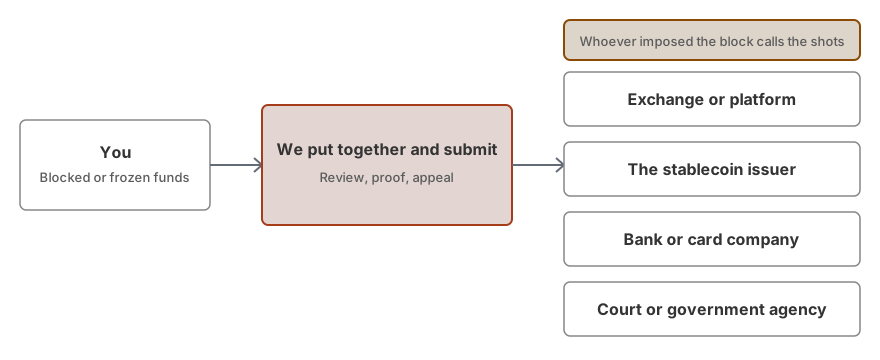
The steps in this process
- No-cost review
Tell us what got blocked and send the notices. We state in writing whether we can help, what probably triggered it and what we need from you.
- Scope in writing, with fee
If we move forward, the scope, the fee model and the names of the independent specialists involved reach you in writing first. You pay nothing before that.
- Evidence gathering
Send your documents through our secure channel. Before anything is passed on, we check for missing pieces, dates that do not line up and contradictions.
- Filing the appeal
We file through the provider's official channel. You get a copy plus the ticket reference, so every later message links back to it.
- Following up
We monitor the reply, help you answer follow-up questions, and say it straight when nothing further can be done.
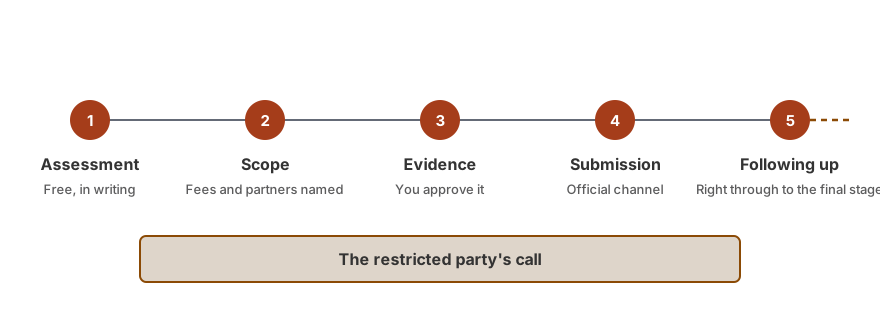
What you should have ready
- Government-issued photo ID plus proof of address
- Card or account statements covering the period before the block
- Export files from the exchange that show both the purchase and the withdrawal used to fund the account
- Bank statements that trace where your original funds came from
- The provider's notices, emails and ticket reference numbers
- If you run a business: gather contracts, invoices, your refund policy and recent chargeback records
- Proof you control the wallet or exchange account the funds were sent from
- A brief written timeline showing how and when you obtained the funds
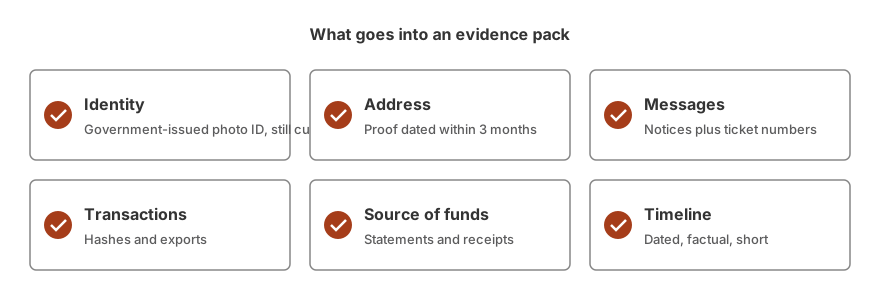
Time estimates
Reviews by providers can run from days to several weeks, and certain processors freeze funds for a set period no matter what the appeal says. You get an estimate after the assessment, and we update it as things move.
Cost Breakdown
The first check costs you nothing. After that, you get a written scope and a fee model matched to your case type. No fee comes before we tell you whether help is possible. Cost Breakdown →
Real questions
What made your crypto card or bank account freeze up?
Blocks usually trace back to a few things: money with an unclear origin, a big or rapid transfer from an exchange, a hit on a high-risk category, or a pattern of chargebacks. The notice often names nothing but a category, so working out the real trigger means going through your recent activity.
Do chargeback issues differ from source of funds issues?
Yes, and the difference matters. Chargeback trouble is about how many customers dispute payments, so the fix is better dispute handling and refund terms people can understand. Source of funds trouble is about where the money came from, so the fix is paperwork. Confusing the two wastes your appeal.
If the account was closed, is there still a way to recover the money?
Often a provider is required to explain how the remaining balance gets returned, though the timing and conditions differ. Put your request in writing: ask for the closure reason and the release process, then keep the reply. We can help you word that request.
Should you open a new account with that same provider?
Usually not, and here is why. A second account can look like you are dodging the block, and it may get closed too. Run the appeal on the existing account first, and keep every exchange in writing.
Should I hire a lawyer to fight a payment processor dispute?
Usually not right away. A lawyer matters once the processor sits on a large balance, brushes off your appeal, or argues over a contract term. Independent licensed lawyers do the legal work, and we will tell you plainly when you reach that point.
The provider stays silent about the reason for my block. What then?
Not every provider will tell you why, and some simply refuse to explain. That does not leave you empty handed. Answer the questions they are most likely to ask, put together a tidy file showing where your funds came from, and request a specific person you can contact. When that file is thorough, a review that has gone quiet often starts moving again.
Related situations
- Proof of funds and wealth origin packs. Prepare a clean source of funds and source of wealth pack that exchanges, banks and processors will accept.
- Who froze my crypto? A freeze diagnosis. Name who froze your funds, then see what can realistically be done.
- Help closing accounts and offboarding. Funds stuck after a closure or exit notice? We write the requests and push the escalation.
- Filing complaints with regulators and ombudsmen. Build a structured complaint for a regulator, ombudsman or consumer body, with a clear chronology.
Read next
Everything on this page is general information. It is not legal advice.