
Crypto cards and neobank accounts: why they freeze, and your next steps
Published: Last reviewed: How we edit
Nobody can promise an unblock. Most blocks happen when an automated risk rule fires. Usual triggers: unclear source of funds, spending in high-risk merchant categories, rapid top-ups, details that fail to match your KYC, and use from a restricted region. Filing a complaint rarely fixes it. What works is a full answer to the provider's request, with documents attached, sent by the official channel.
Got a question about your case? Ask us here:
Two sets of rules meet right where your card sits
Your card links three parties: a card network, a bank or e-money issuer, and a crypto service. Each one runs its own compliance checks, and any single one can block you.
So a card can die while the app still looks fine. A partner you never dealt with may have made the call, and the support agent who answers might not even see why.
The usual reasons for a block
These are patterns, not a diagnosis. The notice you get may only state that your account is under review.
- Source of funds: the provider cannot trace where the money loaded onto the card came from.
- High-risk merchant category: purchases at gambling, forex, crypto or similar merchants can set off extra checks.
- Rapid top-ups: big deposits followed by fast spending stand out from a normal profile.
- KYC mismatch: the name, address or birth date on your card account does not match the documents the provider holds, or one of those documents has expired.
- Region: the card is used in a country the provider does not serve, or a login comes from a place that clashes with your registered address.
- Money from others: funds another person sent you, or transfers that came through peer-to-peer channels.
What the provider actually wants to know
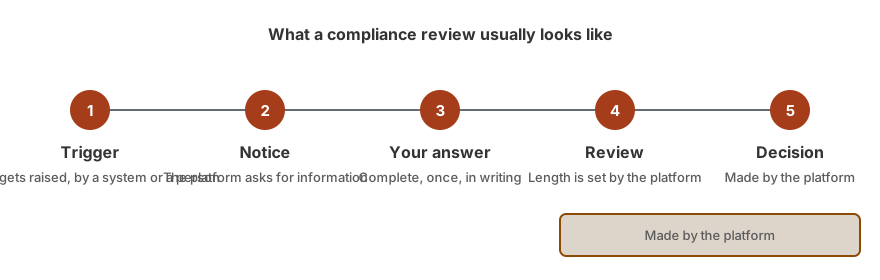
Most block messages hide a request inside them, even when the wording is poor. Find what they ask for, the deadline and which channel they want you to use. Proof of address is a very different ask than proof of where your funds came from.
When the message is vague, send back a single clear question: which document or detail will end the review. Get the answer in writing.
What to do in the first days
One full answer beats several partial ones. Repeated half replies just slow the review down.
- Do not open a second account or shift the balance elsewhere to dodge the review.
- Gather proof of where the funds came from: exchange exports, bank statements, purchase receipts and wallet history.
- Open the app and confirm the name and address on file are exactly what your ID shows.
- Answer one time through the official support channel, and write down the ticket number.
- Never hand your seed phrase, private keys, card PIN or password to anyone offering to help.
When a block becomes closure
Some providers shut the account instead of lifting the block. After that, they may send the balance to a bank account or wallet you can prove is yours, or hold it until the review finishes.
Weeks of silence from the provider, or a large balance, may justify structured support. We sort your documents, figure out what the provider wants and draft the reply. The provider decides, and no one can force a release.
Frequently Asked Questions
Why did my crypto card get blocked with no warning?
Automation usually fires before any human looks. A deposit, a merchant type or a change in location can trigger the system, and the account sits frozen until a reviewer takes the case. You might get a notice afterward.
With a card that is blocked, can you still use the money on it?
Mostly no. A block typically stops spending and withdrawals alike. Ask the provider if funds can move back to a verified bank account or wallet during the review.
If you get a card from a different provider, will that fix it?
That rarely works and often backfires. Moving money fast can look like you are dodging the review. Respond to the first provider's request, and only touch the funds once the account is cleared.
Which paperwork do card companies tend to request?
Expect an identity document, proof of address, bank statements and evidence of where the crypto came from, like exchange records or purchase receipts. What exactly they want depends on the provider and the reason for the flag.
How we can help
- Blocked crypto cards and payment accounts. Crypto card, neobank, or processor account blocked? Find the cause. Gather documentation. File an appeal.
- Proof of funds and wealth origin packs. Prepare a clean source of funds and source of wealth pack that exchanges, banks and processors will accept.
- Help closing accounts and offboarding. Funds stuck after a closure or exit notice? We write the requests and push the escalation.
- Who froze my crypto? A freeze diagnosis. Name who froze your funds, then see what can realistically be done.
Everything on this page is general information. It is not legal advice.